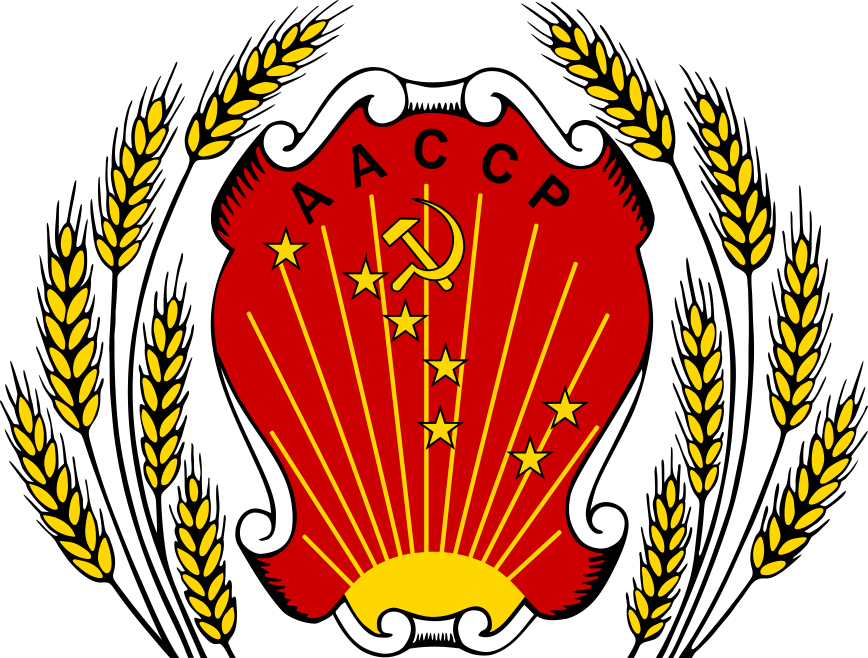
Post-Soviet Alaska
Post-Soviet Alaska plays in a world, where the Russians never sold Alaska to the USA. The simulation starts after gaining independence in 1991, rejecting to be part of the newly formed Russian Federation.
The Beginning of Russian Alaska
Russians were the first Europeans to reach Alaska, which they did in the 18th century, but settlement and colonisation was limited until the charter of the Russian-American Company in 1799. The main attraction of Alaska for Russian colonisers was the sea otter fur trade, which was hunted by the forced labour of the native Alaskan peoples (primarily the Aleuts). Concerted efforts to settle in the region were conducted throughout the 19th century, the chief of which was the settlement of Novoarkhangelsk. During this time the management of the Company underwent several changes, passing from civilian merchants to naval officers. However, a reform of the Company was conducted in the late stages of the reign of Nicholas I, who worried that the Company was hunting the sea otter to extinction and threatening the future viability of the colony, and the naval officers were once again replaced with experienced merchants. The RAC switched its strategy from profiting from the volume of pelts sold to restricting its supply to drive up prices and prevent the hunting of the otter to extinction, which saw success and revitalised the colony, and any plans to sell the colony were quickly abandoned. As gold was discovered first in the Canadian Yukon territory and later in Alaska itself in the late 19th century, the Alaskan colony received an increase in migration from both Russia and abroad. Nonetheless, by the turn of the century the colony remained primarily populated by native peoples.
Alaska in the 20th century
In 1900, the Russian and mixed Russian-native population of Alaska was highly urbanised and coastal (with the native peoples populating the rural interior) and primarily involved in three industries - sea otter hunting, fishing and logging - all of which was transported to Russian far eastern ports by sea. While several projects to build railways in Alaska to speed up travel between settlements were proposed, only one was ever started, running from Nikolaevsk to Novoarkhangelsk, it was never finished due to difficulties with the terrain and the onset of the First World War, and only ran from Nikolaevsk to Novorossiysk. Labour unrest and socialist activism was very high among Russian workers in the colony, especially those working on the railway and in the logging industry, and following the 1905 Revolution, newly formed trade unions were very strong. Russian socialists allied themselves with indigenous activists against the Russian colonial administration throughout the early 20th century, including during the war. Following the February Revolution, Soviets formed by Russian worker-settlers took over the administration of the colony but this was cut short following the October Revolution as garrison troops proved loyal to the White movement and took over the colony, with the support of American and British Canadian expeditionary forces.
Socialism in Alaska and its relation to the Soviet Union
Once again the socialists allied the indigenous peoples and began an insurgency against the western-backed White forces. While unable to dislodge their control from the cities, most land-based routes between cities, including the railway, were constantly raided and sabotaged by rebel forces and as the foreign expeditionary forces began to withdraw following the failure of the Whites in the Civil War, the rebels launched a major offensive that finally defeated the White troops and occupied Novoarkhangelsk. In a similar manner to the Far Eastern Republic, an Alaskan People's Republic was created as a buffer state between the Soviet state and Canada, but this was short-lived and the Republic was absorbed into the RSFSR in 1922 as an Autonomous Soviet Socialist Republic, granting it autonomy on the basis of the large native population which still outweighed the Russian population at this point. Russian, Aleut, Inupiaq, Yupik, Tlingit and Alutiiq were adopted as official languages while 15 other native languages were granted recognised status.
Alaska in Stalin's Soviet Union
During the period of Korenizatsiya, indigenous customs and culture were given some protections and indigenous languages were taught in schools alongside Russian. A large number of Russian-named cities were renamed to their native names, most notably Sitnasuak, which was called Zlatovodsk (or Goldwater). However, with the solidification of Stalin's rule, these policies were rolled back to a significant extent, especially as oil was discovered in the ASSR, and mass migration of Russians and other non-natives - including via forced deportations of certain ethnic groups and the GULag camp system - diminished the share of indigenous peoples in the population but also fuelled industrialisation, as railways were laid, roads were built and rivers dammed across the ASSR (at great cost in life) and oil and gold industry was built up. Logging, although mechanised, still remained a major sector of the Alaskan economy while sea otter hunting significantly declined. With a lull in the ASSR's industrial growth during the Great Patriotic War, the spree continued after the war and culminated in the construction of the Bering strait railway bridge that connected Chukotka with the Alaskan city of Bering.
The Post-Stalin Era
Following the closure of most of the GULag camps during the Khrushchev Thaw most internees decided to stay in Alaska. In addition, the cities of Stalinsk and Voroshilovo were renamed to the native-derived Utkyagvik (Utqiagvik) and Sagavanirktok (Sagvaaniqtuuq), while the district they are in was renamed from Stalinsk District back to the Northern District.
Alaska's Position in the Cold War
Alaska proved to be of geostrategic value during the Cold War as it was a great location for the Soviet Union to place its intermediate-range ballistic missiles to threaten the US west coast. It was often used as a bargaining chip in negotiations and was a key area of de-escalation during the period of détente. Its importance to Soviet Cold War strategy meant there was a constant stream of investment into the Republic despite its remoteness and low population density.
Post-Soviet Alaska's founding
During the 1991 Soviet Union preservation referendum, Alaska voted overwhelmingly (89.8%) to preserve the Union, and after the intention of the Russian government to end the Union became clear, the idea of independence grew among the Alaskan population. The notion was particularly strong among people of indigenous descent and residents of the northern and eastern districts of the ASSR.
Independence
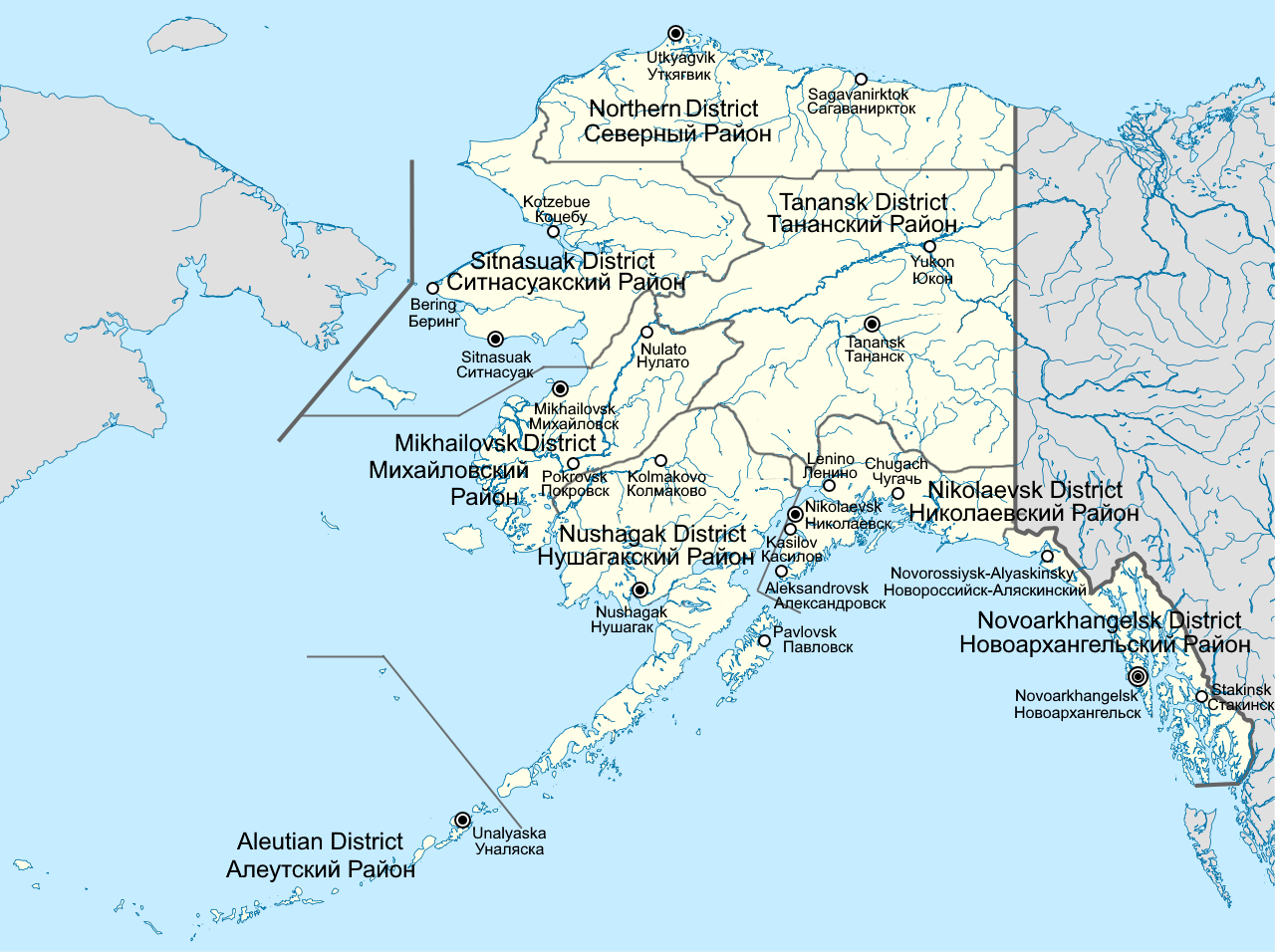
The Supreme Soviet of the Alaskan Autonomous Soviet Socialist Republic passed a resolution to hold a referendum on independence on 13 December 1991, one day after the RSFSR Supreme Soviet ratified the Belovezha Agreement that dissolved the Soviet Union. President Boris Yeltsin and his government called this resolution an "illegal separatist tendency" and threatened to use force if the referendum was not called off. However, logistical issues, insubordination among the native-born Alaskan conscripts and the threat of Alaska coming into possession of nuclear missiles stationed in the Republic prevented any military action and the referendum was held on schedule on 27 January 1992. The results were made public on 28 January 1992, with 207,582 "Yes" votes (61.33%) and 130,881 "No" votes (38.67%). 14,453 ballots were ruled invalid, many of which were left blank. Turnout was 352,916 out of 484,520 eligible voters (72.84%). The Northern, Tanansk, Nikolaevsk, Novoarkhangelsk and Aleutian districts voted in favour of independence while the Sitnasuak, Mikhailovsk and Nushagak districts voted against. Following the results, on the 29 January 1992, the Supreme Soviet of the Alaskan ASSR voted to formally assert its sovereignty from the RSFSR. Alaska failed to attract recognition at first and drawn-out negotiations between the RSFSR and the Alaskan ASSR resulted in recognition from Russia in exchange for the evacuation of nuclear missiles to Russia and Alaska joining the Commonwealth of Independent States, which it did on 15 April 1992, while evacuation of the nuclear missiles under Russian military supervision began on 3 May. 29 January was proclaimed a national holiday as Independence Day by the Supreme Soviet. On 6 June the Supreme Soviet would vote to hold elections to a Constituent Assembly (Russian: Учредительное Собрание) on 22 August 1992.
Map of modern Alaska
Independence Vote as a Table
| Response | Votes | % |
|---|---|---|
| Yes | 207,582 | 61.33% |
| No | 130,881 | 38.67% |
| Valid Votes | 338,463 | 95.90% |
| Invalid or Blank Votes | 14,453 | 4.10% |
| Total Votes | 352,916 | 100.00% |
| Registered voters/turnout | 484,520 | 72.84% |